In the manufacturing industry, many business owners feel like their companies are doing quite well. Orders are coming in, machines are running, and production teams are busy every day. But beneath all this activity, one question often arises that's difficult to answer definitively:Why do costs continue to rise, while margins seem to be declining?
In many cases, the answer isn't in machines, labor, or even sales—it's inBill of Material (BOM)which is never really accurate.
The BOM is often treated as a purely technical document. However, in practice, the BOM is the foundation of almost the entire manufacturing process. When this foundation is flawed, the effects don't stop there, but...spread throughout the operational chain.
Pain: A Bomb Considered Trivial, Yet Critical
In many manufacturing companies, BOMs are still created and managed manually. Some use Excel, while others rely on legacy files inherited from previous projects. Design revisions are often made quickly to meet production targets, but BOM updates don't always keep pace with these changes
BOM Data Inconsistency Issues
As a result, a seemingly trivial but dangerous situation arises: the BOM used by the production team is different from the BOM used by purchasing, while inventory operates on yet another assumption.

In situations like this, problems aren't immediately apparent. Production continues, purchases continue, and reports continue. But slowly, symptoms begin to emerge. Certain materials often run out sooner than expected, while others pile up in warehouses. Production slows down, followed by overtime to catch up. Costs rise, but the exact source is difficult to trace.
For the owner, this is the most tiring condition:business feels busy, but not out of control.
Impact: A Domino Effect That Spreads Throughout the Manufacturing Process
A BOM error isn't a local error. It works like a domino effect. When one piece falls, others will follow.
In the purchasing department, inaccurate BOMs lead to material purchases that do not match actual needs. Raw materials are purchased based on inaccurate figures, leading to speculative purchasing decisions. In the short term, this puts pressure on cash flow. In the long term, it creates a pattern of waste that is difficult to break.
The problem then shifted to inventory. Differences between physical and system inventory became "normal." Stocktaking consistently yielded discrepancies, but the root cause was never truly resolved. The warehouse was deemed careless, when in fact, it was the system that was not providing accurate data.
On the production side, operators are forced to adjust to field conditions. When materials don't match the BOM, they find workarounds to keep the process running. Unfortunately, these adjustments are rarely systematically recorded. As a result, management loses visibility into actual material consumption.

Why does COGS become inaccurate?
The problem culminated in cost and financial reports. The Cost of Goods Sold (COGS) no longer reflected reality. Margins appeared healthy on the reports, but were not reflected in the company's accounts. Owners began to doubt the system's figures, and business decisions reverted to relying on intuition.
Solution: Putting BOM at the Core of a Manufacturing ERP System
The BOM problem is not simply a matter of team accuracy or discipline. On a modern manufacturing scale, this problem can only be solved by an integrated ERP system.
For owners, this is a major change. For the first time, business decisions are supported by consistent data from end-to-end.

Single Source BOM
In manufacturing ERP, the BOM is no longer a separate file. It's become a central reference shared by engineering, purchasing, inventory, and production. Every change is recorded, every revision has a clear version, and only active BOMs can be used for production.
True Cost Visibility
Furthermore, ERP allows companies to understand production costs more honestly. Materials used, scrap, and variances from standards are all recorded. This is where COGS begins to reflect the true state of the economy. For owners, this is a major change.
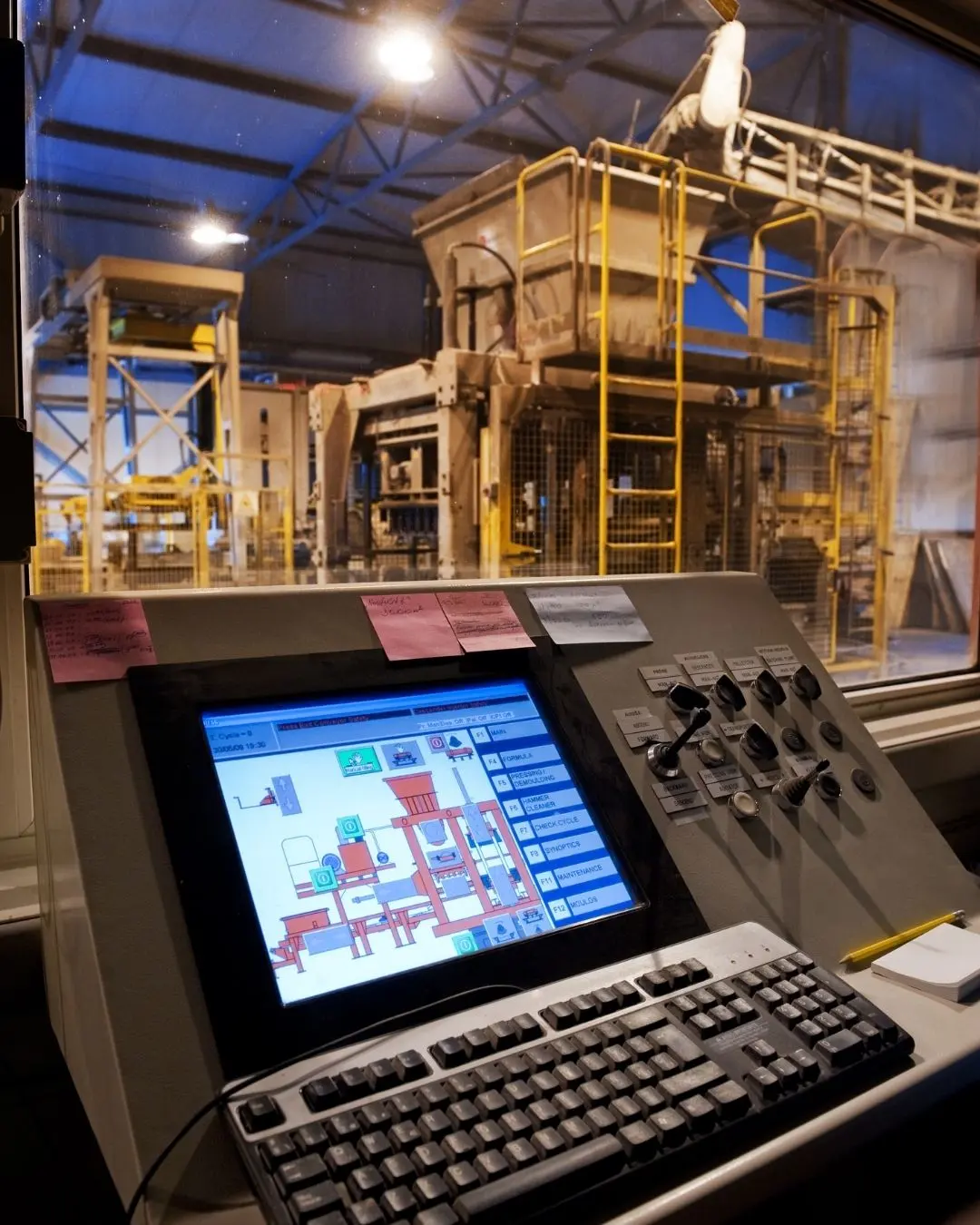
Real-Time Production Control
This integration has a significant impact. Material requirements planning is more accurate because the system calculates them directly from the BOM. Inventory moves in real time following production consumption, rather than based on assumptions. Production runs on validated data, rather than field estimates.

Why Does ERP Make BOM “Work” Again?
Some of the real benefits of integrated BOM in manufacturing ERP include:
- Data consistency between departments
- More precise material planning
- Stronger production cost control
- Full visibility of deviations
But most importantly, ERP changes the way we look at BOM—from a technical document to a business control tool.
It's Time to Stop the Domino Effect in Your Production
If your current manufacturing business:
- Often experience stock differences
- Production costs are difficult to predict
- Margins feel tight even though sales are up
- Relying on many assumptions in decision making
So it is very likely that the problem is rooted inPoorly managed BOM.
Fujicon Priangan Perdana helps manufacturing companies buildERP system that places BOM as the foundation of business processes, not just an administrative complement.