The CEO Problem: Too Much Data, Too Little Control
In most factories, the problem is not the absence of data. It’s the absence of an executive rhythm. Production, logistics, and finance teams may already track hundreds of metrics. Yet when the CEO asks, “Are we winning today?” the answers are often long explanations, partial snapshots, or late signals.
A daily KPI set must do three jobs at once:
First, it must reflect the real constraints of manufacturing: time, capacity, yield, flow, and delivery.
Second, it must be actionable: every metric should prompt a clear “so what” and “do what.”
Third, it must connect operations to money: because operational excellence that doesn’t convert into margin and cash is just busy work.
That’s why the following seven KPIs work so well. Together, they form a compact narrative: How well we ran, how reliably we shipped, how much we lost, how much got stuck, how long cash is tied up, how risky receivables/payables are, and whether orders truly made money.
1) OEE (Overall Equipment Effectiveness): “How much of our capacity actually became output?”

If you only look at output volume, you can be fooled by overtime, extra shifts, or short-term heroics. OEE forces reality.
It compresses equipment performance into a single indicator by combining availability, performance, and quality.
For a CEO, OEE matters because it answers the most fundamental question: Are we converting our installed capacity into good product efficiently? If OEE drops, you may be experiencing unplanned downtime, speed losses, micro-stoppages, rework, or quality rejects—issues that quietly eat margin.
The daily CEO view doesn’t need every loss code. It needs a sharp alert: current OEE vs target, trend vs yesterday, and the top loss driver. When OEE is stable and improving, it’s a powerful leading indicator that your factory is under control.
2) OTIF (On Time In Full): “Did customers get exactly what we promised?”
A factory can look “efficient” and still fail commercially if it can’t deliver. OTIF measures delivery reliability: on time and in full quantity/specification.

CEOs love OTIF because it’s brutally honest. It reflects planning quality, inventory availability, production adherence, logistics execution, and even master data discipline. When OTIF drops, the business pays twice: customer trust erodes and expediting costs rise.
Daily tracking is essential because delivery failures are easier to fix before the truck leaves. A CEO report should show today’s OTIF performance, the shipments at risk (or already missed), and the primary reasons: material shortage, production delay, quality hold, or transport issue.
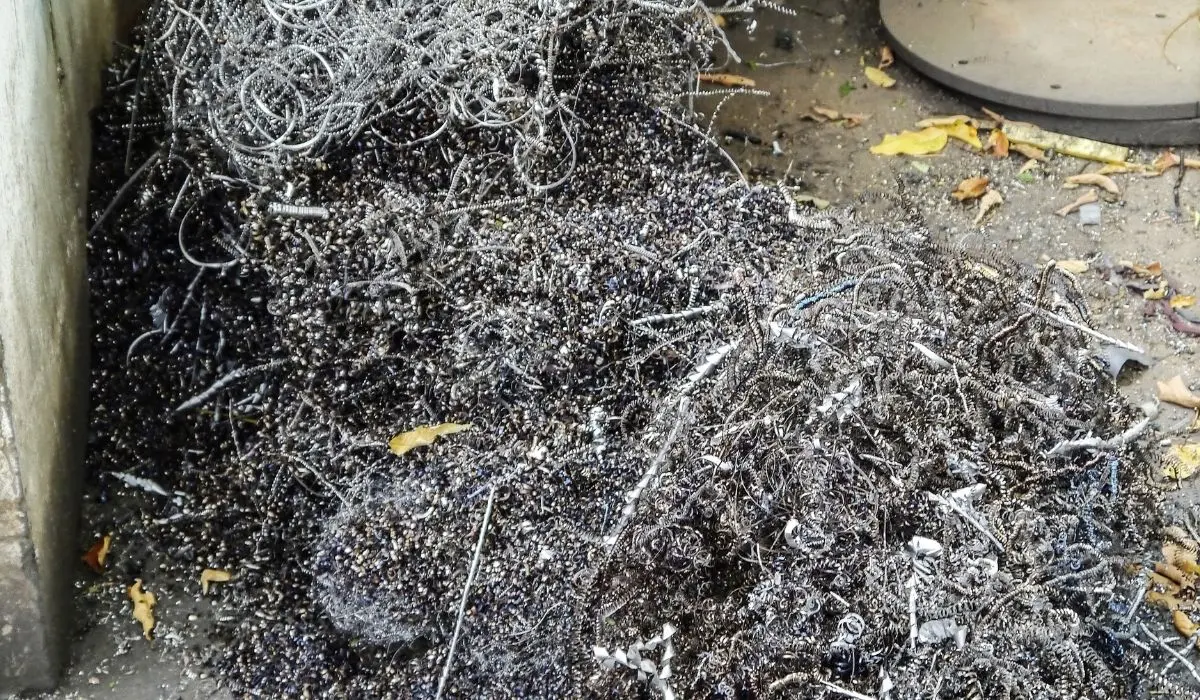
3) Scrap Rate: “How much value did we throw away today?”
Scrap is not just waste; it’s converted material and labor that never becomes revenue. The scrap rate tells you how efficiently the factory transforms inputs into sellable output.
Scrap is not just waste; it’s converted material and labor that never becomes revenue. The scrap rate tells you how efficiently the factory transforms inputs into sellable output.
What makes scrap rate CEO-grade is how directly it hits cost and margin. A “small” increase can compound quickly, especially in high-volume lines or expensive raw materials. And scrap often signals deeper problems: unstable processes, equipment drift, supplier variability, or training gaps.
Daily monitoring helps you catch abnormal spikes. A CEO doesn’t need long root-cause reports every morning; the CEO needs an early warning and a discipline: when scrap rises beyond a threshold, the team triggers containment and investigation immediately.
4) WIP (Work in Process): “How much product is stuck in the middle?”
WIP is a silent killer. Too little WIP can starve downstream processes, but too much WIP usually indicates imbalance, bottlenecks, scheduling instability, or quality holds. High WIP also ties up cash and increases lead time.

For the CEO, WIP is a flow indicator. If WIP is growing while shipments are flat, your factory is accumulating “unfinished promises.” That typically leads to firefighting: overtime, expediting, and missed delivery windows.
Daily WIP should be seen by critical stage (or by major process area). The CEO view can be simple: total WIP value, top two stages where WIP is piling up, and whether the bottleneck is shifting. This is enough to steer priorities: elevate constraints, rebalance labor, or fix quality holds.

5) Inventory Days (Days of Inventory on Hand): “How long will our inventory last at current consumption?”
Inventory isn’t automatically good or bad. But it’s always a cash decision. Inventory days translate the warehouse into time, making it easier to see whether your stock is too high (cash trapped, obsolescence risk) or too low (service failures, production stoppage risk).
As a daily KPI, inventory days becomes a powerful executive tool when combined with segmentation: raw materials, WIP, and finished goods. A CEO might accept higher raw material days if supply is volatile, but finished goods days that balloon often point to demand issues or planning inefficiency.
A clean daily report highlights the trend and the exceptions: which items are overstocked, which items are at stockout risk, and how inventory position impacts OTIF.
6) AR/AP Health (Accounts Receivable / Accounts Payable): “Are we collecting and paying on time—and is cash flow safe?”
Many CEOs focus on production dashboards and forget that manufacturing is a cash game. You can produce profit on paper and still suffer cash stress if receivables are slow or payables are unmanaged.

Daily AR/AP health doesn’t require a full finance meeting. It requires a quick pulse: total overdue receivables, top overdue customers, collections expected today, and payables due within a short horizon. The goal is simple: prevent cash surprises.
This KPI also encourages cross-functional alignment. When sales, operations, and finance see AR risk daily, commercial decisions become more disciplined: credit limits, payment terms, and delivery holds become policy-based—not emotional.

7) Margin per Order: “Did we make money on what we shipped today?”
This KPI is the CEO’s truth serum. Volume without margin is growth into trouble. Many factories focus on utilization and output, but daily margin per order ensures you don’t celebrate losing deals.
Margin per order should be grounded in reality: material cost, labor or conversion cost, overhead assumptions (at least standard), and logistics costs where possible. Even if the number is based on standard costing, the trend is valuable. If margin is shrinking, the CEO can ask the right questions immediately: price erosion, yield loss, overtime, premium freight, or product mix shifts.
A daily view might show average margin on today’s shipped orders, the bottom five margin orders, and the largest deviations from expected. That’s enough to drive commercial and operational actions.
How These 7 KPIs Become a “Short but Powerful” Daily Report
The magic is not the KPIs themselves—it’s the format and the cadence. A CEO report should fit on one page (or one screen) and take less than 10 minutes to review. It should be consistent every day, with clear thresholds and ownership.
The best practice is to treat the report as a narrative:
- OEE tells you how well the factory ran.
- Scrap rate tells you what you lost.
- WIP and inventory days tell you what got stuck and how cash is tied up.
- OTIF tells you what customers experienced.
- AR/AP tells you whether cash flow is safe.
- Margin per order tells you if today’s execution produced profit.
When these are connected, the CEO can steer the business without drowning in details.
Conclusion
A manufacturing CEO doesn’t need 50 KPIs. A CEO needs seven daily truths that expose execution, flow, cash, and profit—before problems become expensive and political. OEE, OTIF, scrap rate, WIP, inventory days, AR/AP, and margin per order are a compact executive system that turns daily operations into controllable outcomes.